A robot arm takes a laptop apart
A Seeed reBot arm on a workbench in Shenzhen, a 2010 MacBook, two cameras, and a digital twin of all of it. The twin plans and rehearses every screw before the real arm moves.
10/10screws out in the twin
0.11 mmbit off the screw axis
0.04°twin joints vs the real arm
All ten screws (36×, the carry to the tray at 3×)
A 3D-printed holder on one finger keeps the bit on the wrist axis. The arm finds each head by touch, pushes, turns, and carries the freed screw to the blue tray.
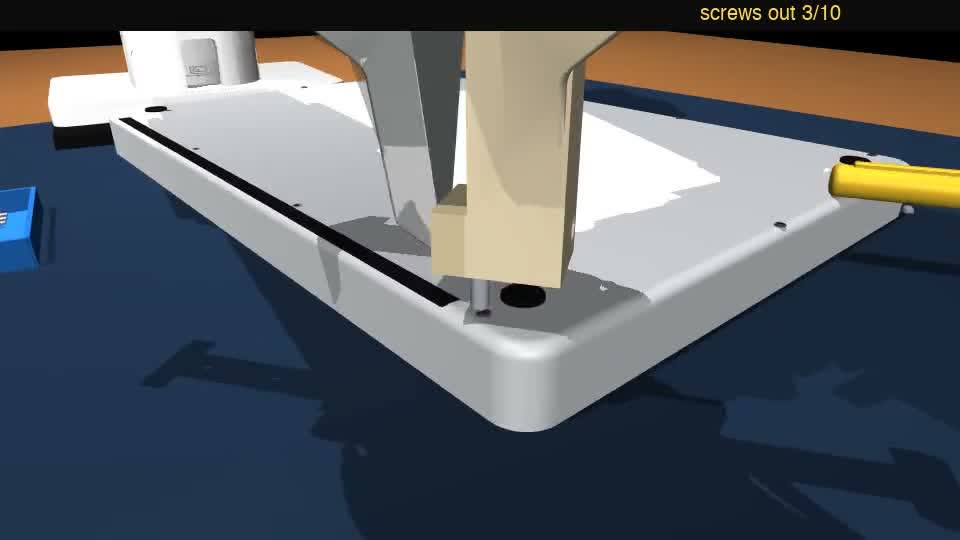
Bit in a screw hole
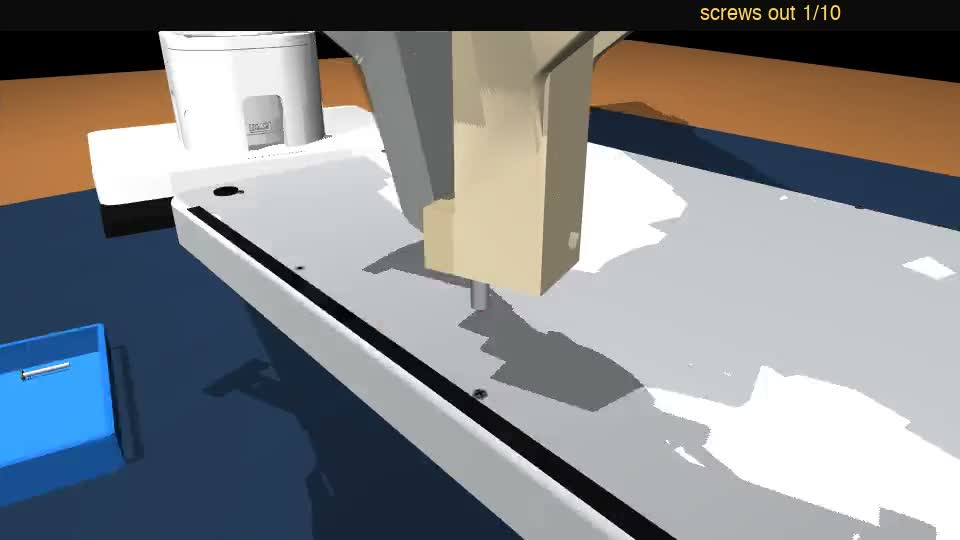
A freed screw in the tray
Then the bottom cover comes up, 3×
All ten screws are in the tray. The bit hooks the vent slot on the hinge edge and lifts it 32.5 mm, then sets the cover back down. The arm never comes closer than 8 mm to the cover.
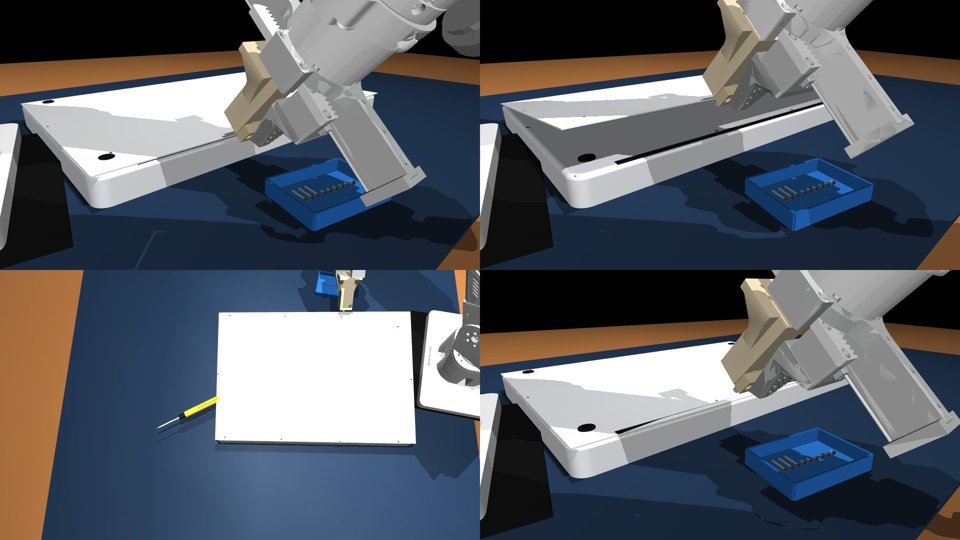
Bit in the slot, edge lifted, from above, set back
One screw through the arm's real control software, 3×
The same commands the real arm gets, sent to a simulated motor bus
Physics: can the bit actually turn the screw?
Phillips #00 bit in the screw head. At 5 N of push the bit climbs out; at 15 N it turns the screw.
Gripper pinches a screwdriver at 15 N, lifts and shakes it
The twin matches the real arm
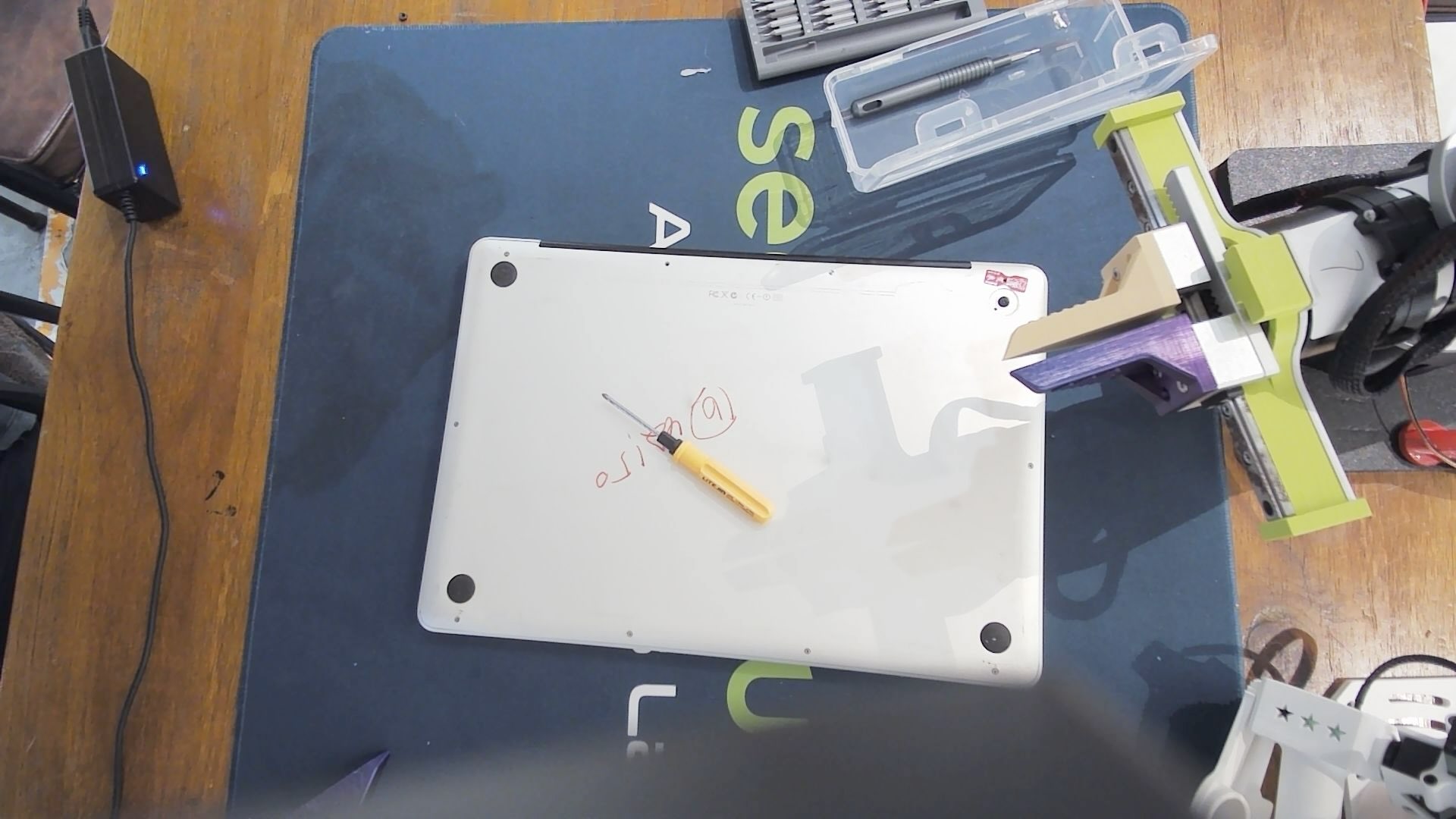
Real overhead camera
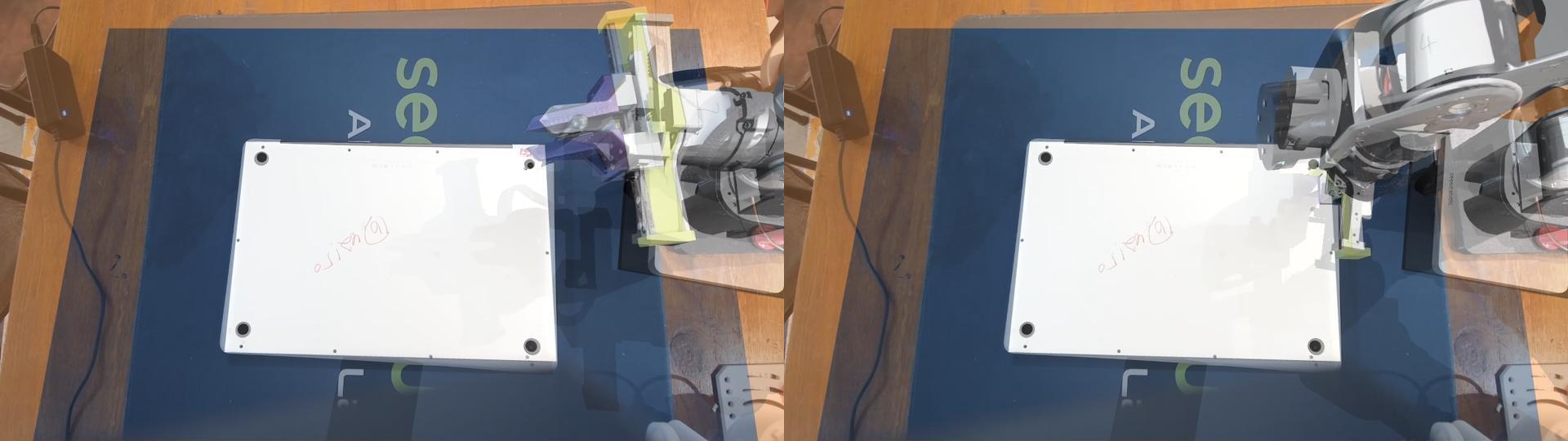
The twin drawn over the same camera
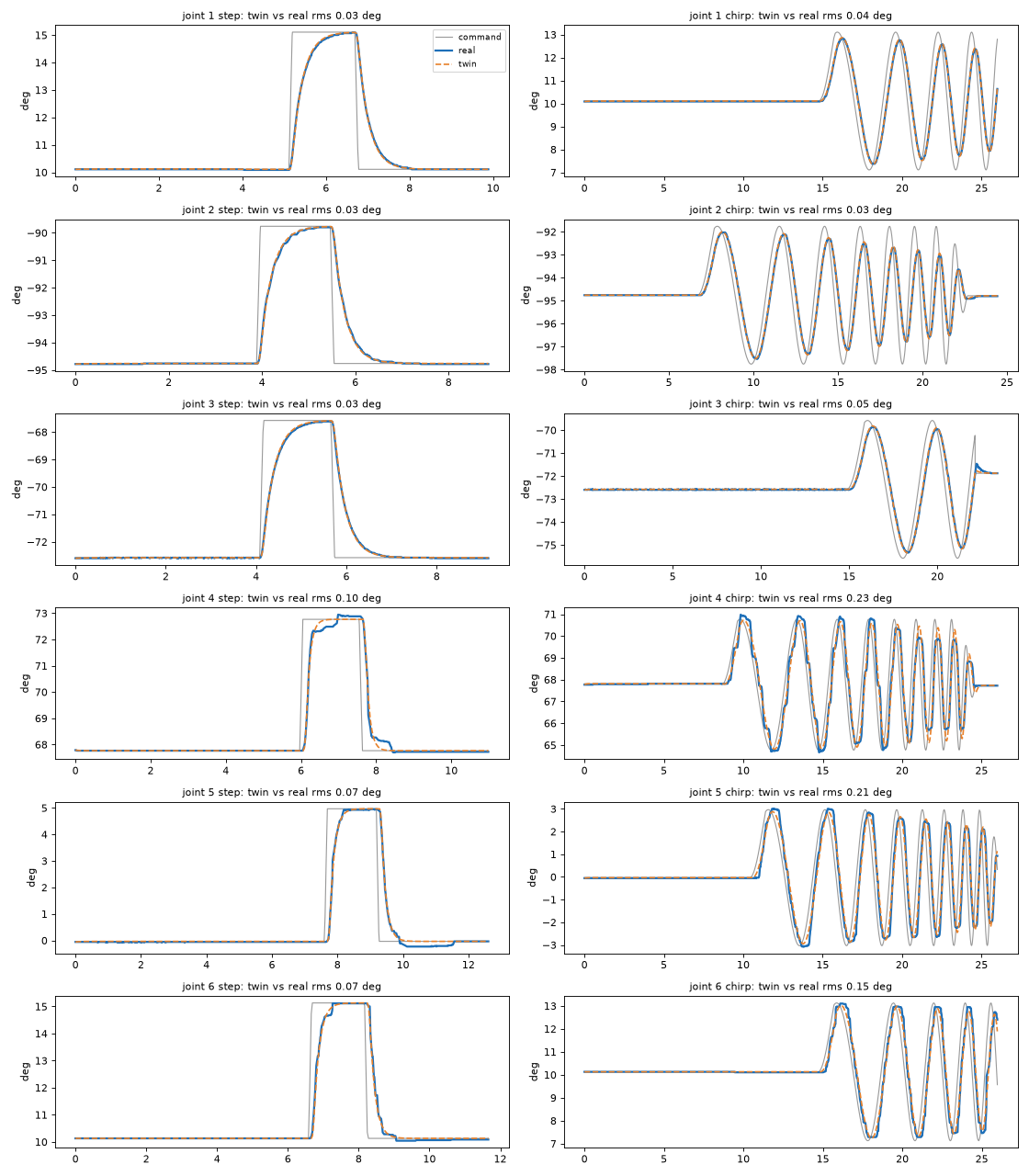
Each joint's measured response (dead time, lag, top speed) fitted from real moves, so the twin moves like the real arm