ce-net / design

CE Mold: your part in, its mold out.

Send us the part you want cast. We design the two-part printed mold for it, with seats for anything that goes inside, clamps where cables leave, a pour funnel, air vents and bolt holes, and print it on our farm. You pour silicone or PU and get the part.

Where it stands: a design sample. The part here is a sensing pad with four electrodes, its sizes estimated from a photo. The mold is designed and checked in CAD; it has not been printed or poured yet.

The two-part mold for a sensing pad, designed and checked in CAD. Turn it yourself in the 3D studio.

What is in it

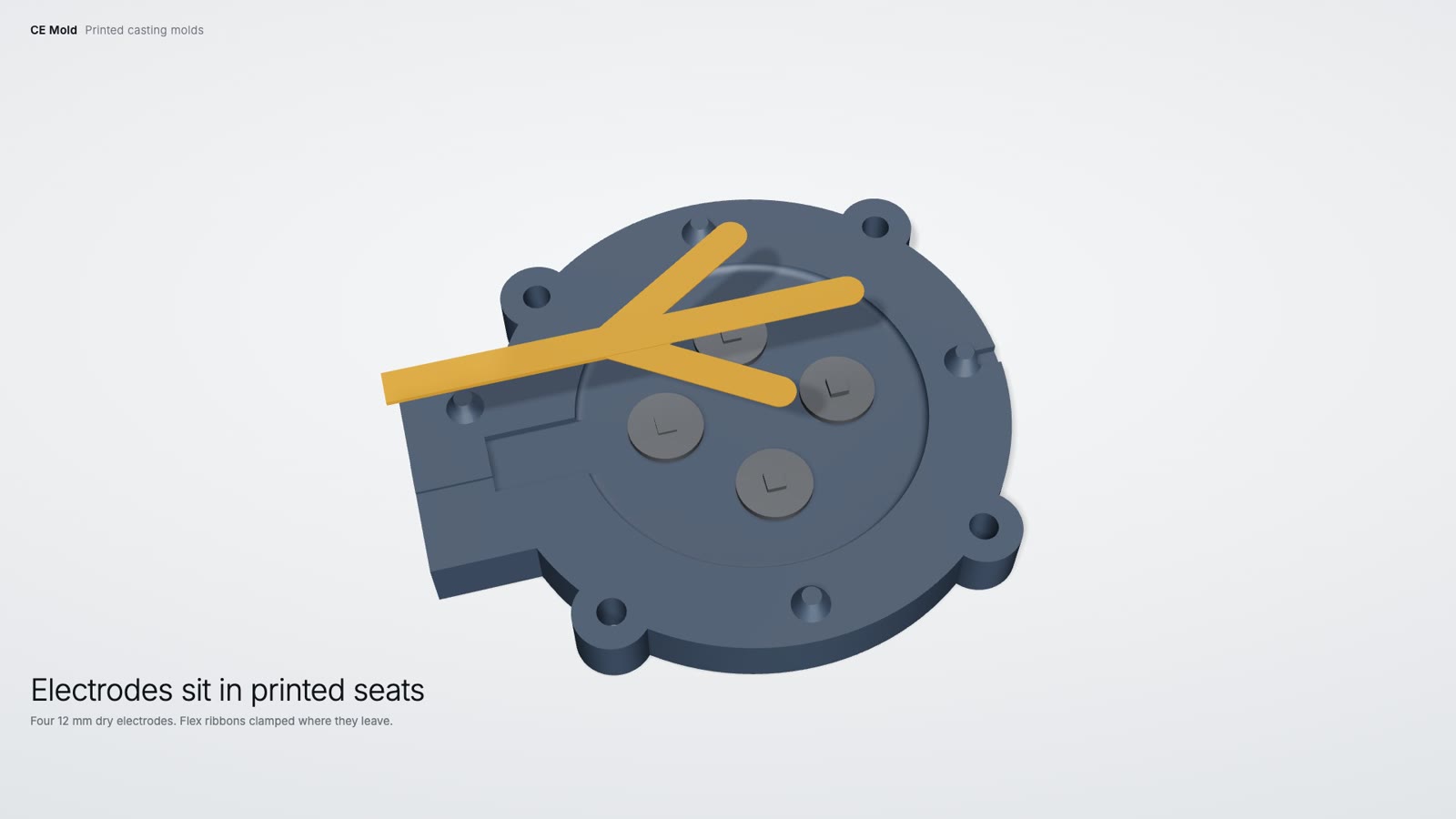
Four round electrodes sitting in the printed bottom half of the mold
Seats for the inserts. The electrode bristles drop into pockets in the bottom half, so each electrode sits where it should while the silicone goes in.
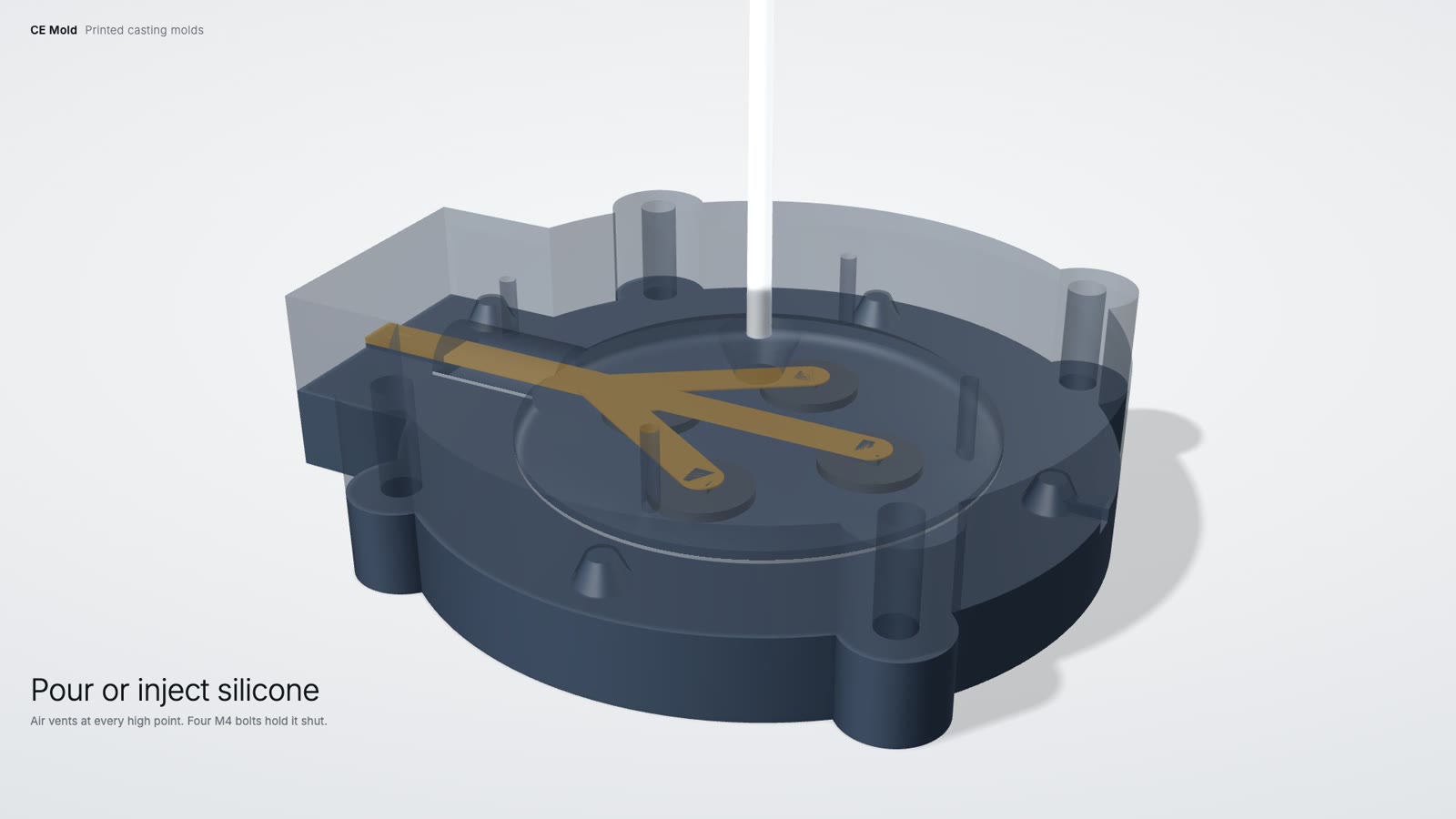
The closed mold, top half see-through, with silicone pouring into the centre funnel
Pour and vent. A funnel at the centre and a 2 mm vent at every high point, so air leaves before the silicone traps it. Four M4 bolts hold the halves shut.
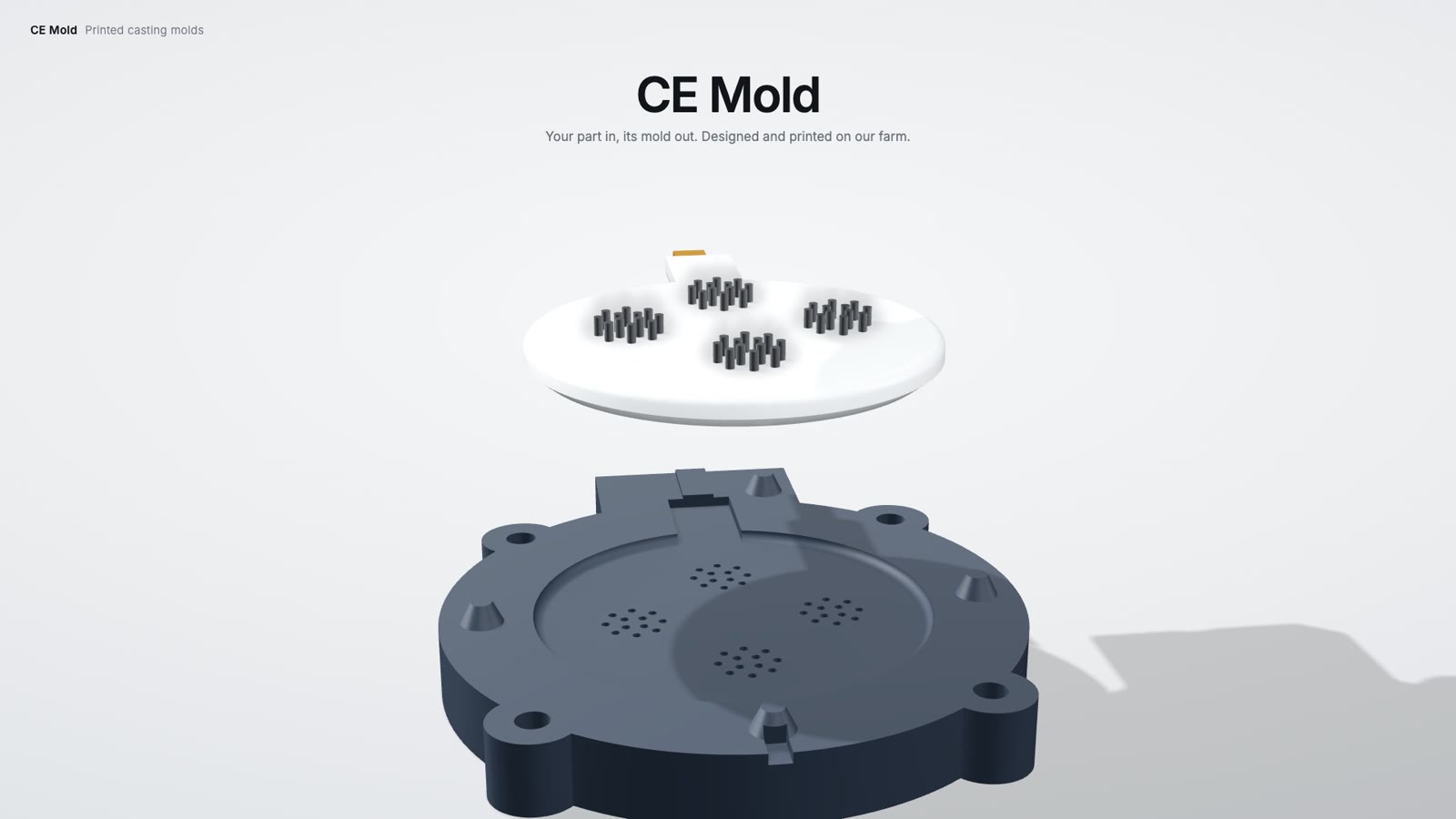
The finished white pad lifted out of the open mold, electrodes facing up
One part, cast in one go. The pad comes out with the electrodes sealed in and the flex ribbons leaving through its tail.

Checked before it prints

FitThe space inside the closed mold equals the part plus its inserts, 16 283.9 mm³ against 16 283.9 mm³, measured off the solids
Release670 straight lines through the part: neither half grips it when you lift it off
CablesThe flex ribbons leave between the halves over a raised clamp, so nothing has to be cut to open the mold
PrintTwo PLA halves, 95 × 82 × 13 mm each, on any 256 mm bed
CastSilicone (around 40A) or 90A PU, about 17 g

Have a part to cast?

Send the STEP file, or photos with a ruler in them, and say what goes inside it. We answer with the mold design and a price, then print it. CE Engineering · Small CAD jobs